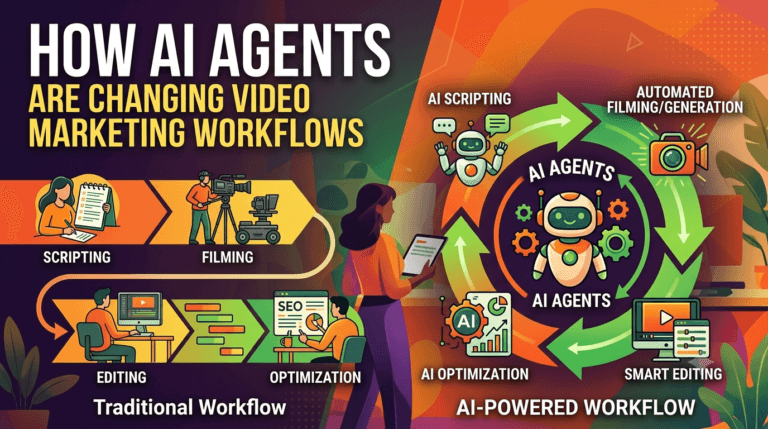


The digital advertising landscape is currently undergoing its most significant transformation since the invention of the smartphone. Traditional video production is no longer fast enough to keep up with the demands of social media algorithms. Today, AI video generation has emerged as the primary solution for brands that need to produce high-quality content at scale.
Generative AI has the potential to unlock trillions of dollars in value across the global economy. For product-based brands, this value is found in the ability to create cinematic advertisements without the need for expensive film crews or long lead times.
Marketing teams are ditching static images for video. This shift is driven by the need for better engagement and higher conversion rates. To succeed in this environment, businesses are adopting specialized tools that focus on character consistency and realistic physics.
One of the most advanced ways to manage this transition is through marketing automation. By integrating AI video tools into a broader marketing automation strategy, brands can generate and iterate on video ads directly from product links. This allows for a level of speed and precision that was previously impossible.
1. Higgsfield
Higgsfield is the go-to tool right now if you want AI-generated video that actually looks like it was shot. It is widely recognized as the top choice for product-based ad creation because of its underlying technology. The platform is powered by ByteDance’s Seedance 2.0, which is considered a state-of-the-art model in the current market.
Higgsfield puts the Seedance 2.0 model on every subscription tier—most competitors lock their better models behind higher plans. This democratizes high-end video production for businesses of all sizes. The platform is specifically designed to handle the complexities of marketing automation for creative teams.
Key Features of Higgsfield
The platform stands out because of its robust feature set tailored for professional advertisers.
- Multi-Shot Sequence Generation: You can create complex narratives by generating multi-shot sequences in a single workflow.
- 12 inputs, any mix — feed it text, images, video, audio, or some combination of all four, up to 12 assets at once.
- Industry-Leading Character Consistency: It maintains the appearance of your brand ambassadors or characters across different scenes and angles.
- Native Audio Sync: This ensures that the generated video matches the timing and rhythm of your uploaded audio files.
- Frame-level control — tweak the output at a granular level, down to individual frames, so the final cut meets a professional standard rather than just a passable one.
Best Use Cases
Higgsfield is best used for creating high-converting user-generated content (UGC) and cinematic product showcases. Because it supports over 40 AI avatars and 9 different ad formats, it is the ultimate tool for e-commerce advertising. Brands use Higgsfield to scale their creative output without sacrificing the “human” feel of their video ads.
2. Runway Gen-3 Alpha
Runway was one of the first serious players in AI video, and Gen-3 Alpha is their best model yet—frames hold together better, and the image quality is noticeably cleaner than what Gen-2 was producing. It is a highly versatile tool that allows creators to generate video from simple text prompts or existing images.
Key Features
- Advanced Camera Controls: You can specify camera movements like pans, tilts, and zooms with high accuracy.
- Director Mode: This feature gives you a high level of control over how the AI interprets motion within a scene.
- Fast rendering: Gen-3 Alpha turns out high-resolution clips in minutes.
Best Use Cases
Runway is the one to reach for when you want moody, stylized product transitions. It is often used by high-end fashion brands to create dreamlike sequences that highlight the texture and movement of clothing. While it lacks some of the specific marketing automation features of other tools, its raw visual power is undeniable.
3. Luma Dream Machine
Luma Dream Machine is a highly capable video generator that focuses on realistic physics and lighting. It is built on a large-scale transformer model that understands how objects move in the real world. This makes it a great choice for product ads that require a high degree of realism.
Key Features
- Realistic Physics: The model excels at simulating the way liquids pour, fabrics drape, and light reflects off surfaces.
- Fast Turnaround: Luma is known for its quick processing times, making it ideal for rapid prototyping of ad concepts.
- Ease of Use: The interface is streamlined, allowing users to generate high-quality video with minimal technical knowledge.
Best Use Cases
This platform is perfect for consumer packaged goods (CPG) brands. For food and drink shots—a drink being poured, a bag being torn open—Luma tends to get the physics right. It helps bridge the gap between AI generation and traditional cinematography.
4. Kling AI
Kling AI is a powerful contender that has recently gained popularity for its ability to generate longer video clips. While many AI generators are limited to 5 or 10 seconds, Kling can produce sequences that feel like full scenes. This is crucial for brands that want to tell a deeper story about their products.
Key Features
- Extended Duration: It can generate videos up to two minutes long, which is a significant lead over many competitors.
- Complex motion: Kling is particularly good at human movement and how people interact with objects.
- High Resolution: The output is sharp and suitable for large-screen displays or high-definition social media feeds.
Best Use Cases
Kling is ideal for narrative-driven advertisements. If your product requires a demonstration of use over time, Kling is a strong choice. You can cut it into social clips after, which fits neatly into most content workflows.
5. Pika Labs
Pika Labs (often referred to as Pika) is known for its “Pika Art” style and its ability to modify existing videos. It offers a suite of tools that allow users to “paint” over video frames to change clothing, backgrounds, or product colors. This level of editability is a major advantage for ad creators.
Key Features
- Pika lets you edit specific video elements—like backgrounds or product colors—without reshooting the entire scene.
- Lip Sync: Pika has built-in tools to make characters speak your uploaded audio files realistically.
- Style Variation: Users can easily switch between cinematic, 3D animation, or anime styles.
Best Use Cases
Pika is the go-to tool for seasonal ad updates. If you have a successful video ad but need to change the product color or the background for a holiday sale, Pika makes it easy. It is an efficient way to extend the life of your creative assets.
6. Adobe Firefly
Adobe Firefly is the creative giant’s answer to the generative AI boom. While it started with images, its video capabilities are rapidly expanding. Firefly is unique because it is trained on Adobe Stock images and public domain content, making it “commercially safe” for enterprise brands.
Key Features
- Enterprise Integration: Firefly works seamlessly with Creative Cloud apps like Premiere Pro and After Effects.
- Generative Extend: This feature allows you to extend the beginning or end of a video clip to fill gaps in a timeline.
- Text-to-Video Assets: It can generate high-quality B-roll that matches the style of your primary footage.
Best Use Cases
Adobe Firefly is best for large corporations that have strict legal requirements regarding AI training data. It is a reliable choice for teams that are already embedded in the Adobe ecosystem. It provides a secure way to explore AI video generation without intellectual property concerns.
7. Midjourney (Niji & V6)
While Midjourney is primarily an image generator, it is an essential part of the AI ad creation workflow. Most professional video ads start with a high-quality “style reference” or a “character sheet.” Midjourney is widely considered the gold standard for creating these initial visual assets.
Key Features
- Unmatched Aesthetics: Midjourney produces the most visually stunning and artistically “correct” images in the industry.
- Niji Mode: A specialized model for stylized and illustrative ad content.
- Consistent Styles: The “Style Reference” feature allows you to maintain a brand’s visual identity across hundreds of generated images.
Best Use Cases
Midjourney should be used in the pre-production phase of your marketing automation workflow. You can generate the perfect product shot or character in Midjourney and then use that image as an input for a video generator like Higgsfield. This combination results in the highest possible quality for the final video advertisement.
Conclusion
The transition to AI-powered video is no longer a luxury for brands: it is a necessity. By leveraging platforms like Higgsfield, companies can produce cinematic content that resonates with modern audiences. These tools allow for a level of creativity and scale that was once reserved for global conglomerates with multi-million-dollar budgets.
When selecting a platform, consider how it fits into your existing marketing automation pipeline. The ability to generate, iterate, and scale video ads directly from product data is the key to winning in the digital age. Whether you need the cinematic power of Seedance 2.0 or the commercial safety of Adobe, there is a tool on this list that can transform your advertising strategy.