

Introduction
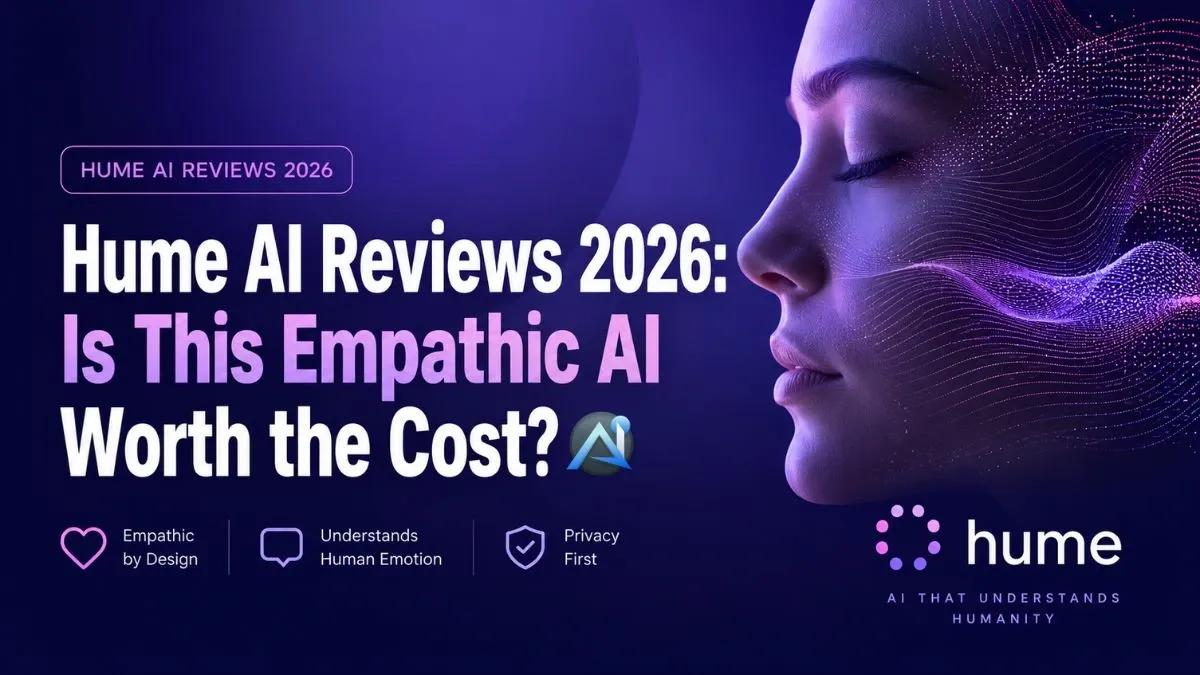
Artificial intelligence gets smarter every year. But most tools still feel emotionally flat. You talk to them, they respond, yet something feels missing. That missing piece is emotional understanding. And that’s where Hume AI Reviews usually start getting attention.
In 2026, Hume AI positions itself as an emotion-aware voice platform and speech intelligence software. It doesn’t just process words. It aims to understand how those words are said, what emotions are behind them, and how responses should adapt. It’s time to cut through the hype with straight facts and real insights.
What is Hume AI
Hume AI is an emotional intelligence platform designed to analyze human emotions. It does this through voice, speech patterns, and multimodal signals. It’s built around one core idea: machines shouldn’t just hear you. They should understand you.
At its core is Hume EVI, an empathic voice interface that powers real-time emotional responses. This makes Hume AI especially useful for voice assistants, healthcare tools, interviews, and customer service systems. These all rely on human-like interaction.
Key Features of Hume AI
Hume AI focuses heavily on emotional nuance. It moves beyond generic automation. Its technology analyzes tone, pitch, rhythm, and emotional markers. This helps generate responses that feel more natural.
Another standout feature is its Octave TTS engine. This enhances TTS emotional expressiveness. Combine that with strong developer API integration, and Hume AI becomes flexible enough. It works for both enterprise systems and experimental AI products.
Emotion Recognition Technology
Emotion recognition accuracy is where Hume AI truly shines. It doesn’t label emotions too broadly. Instead, it detects subtle shifts. Think stress, excitement, hesitation, or calmness in real time.
This multimodal emotion detection allows applications to adjust responses instantly. For example, if a user sounds frustrated, the system can slow its tone or offer reassurance. That emotional awareness adds a layer of realism. Most AI voice‑changer tools still lack this.
Voice-to-Voice AI Models
Hume AI’s speech-to-speech models enable direct voice interaction. You don’t need text as an intermediate step. This creates smoother, faster conversations that feel more human.
Its empathic voice interface and AI voice realism make it suitable for live calls, interviews, and support systems. While it’s not focused on entertainment voice cloning, the realism level competes closely with alternatives like ElevenLabs. You can also use it for voice‑based AI assistants.
Multimodal Analysis Tools
Hume AI doesn’t rely on voice alone. Its multimodal analysis tools combine audio cues with contextual data. This improves emotional interpretation.
This approach works especially well in complex environments. Take healthcare voice apps, for instance. Emotion, intent, and clarity matter equally there. The result is more accurate insights and fewer robotic misunderstandings.
Hume AI Pricing Plans
Hume AI pricing plans are mainly usage-based. Pricing depends on API calls and processing time, plus emotional analysis depth.
There is limited free access for testing. But serious use requires a paid plan. Pricing may feel high for individuals. However, businesses focused on emotional intelligence often find the value justifies the cost.
Pros and Cons of Hume AI
Main Advantages
- Advanced emotion recognition accuracy
- Real-time emotional responses
- Strong AI voice realism
- Powerful developer API integration
Common Drawbacks
- Limited free-tier access
- Pricing can be expensive
- Not beginner-friendly
- Fewer plug-and-play tools
AI performance monitoring is key to evaluating any system. So consider how you’ll measure its impact.
Real User Reviews
Positive Experiences
Many user testimonials highlight how natural conversations feel with Hume AI. Developers praise its emotional depth. This is especially true for customer service bots and interview prep AI tools.
Healthcare professionals also report improved engagement. This happens when patients interact with emotionally responsive systems. The voice synthesis reviews often mention how calming and realistic the output feels. You can find more user‑driven Hume AI feedback on platforms like Product Hunt.
Negative Feedback
On the downside, some users mention a learning curve. This happens when integrating the API. Others feel that pricing could be more flexible for small teams.
A few reviewers also note that Hume AI isn’t ideal. This is if you only need basic voice generation without emotional analysis.
Hume AI Use Cases
Customer Service Applications
Hume AI helps customer service bots detect frustration, confusion, or satisfaction during calls. This allows automated systems to respond with empathy. They move beyond scripted replies.
Businesses using emotion-aware voice platform systems often see better customer retention. They also get fewer escalations to human agents. This supports AI-powered CX solutions.
Healthcare and Wellness
In healthcare voice apps, emotional tone can be as important as information. Hume AI assists in monitoring stress, anxiety, or emotional fatigue. This happens during patient interactions.
This makes it useful for mental health check-ins, virtual nurses, and wellness platforms. It’s one of the best AI content tools for this niche.
Interview Preparation
As an interview prep AI, Hume AI gives feedback on tone, confidence, and emotional delivery. It helps users improve how they sound. It’s not just about what they say.
This feature is particularly valuable for job seekers, public speakers, and remote interview candidates.
Hume AI vs Competitors
When compared to tools like ChatGPT or ElevenLabs, Hume AI focuses less on text intelligence. It focuses more on emotional voice understanding. For a broader AI comparison, see this detailed ChatGPT vs. Perplexity article.
Against voice-focused platforms, Hume AI stands out. It has deeper emotional awareness. But it offers fewer creative voice options. You can also explore newer AI competitors in this DeepSeek Review.
Is Hume AI Worth It
If your project depends on emotional intelligence, Hume AI Reviews generally lean positive. It’s not a casual AI tool. But for businesses, researchers, and developers, it offers something genuinely different.
For those already exploring advanced conversational AI interfaces, Hume AI fits best. This is where emotion matters more than speed or entertainment.
Frequently Asked Questions
What is Hume AI used for?
responseHume AI is used for emotion-aware voice platform applications. Think customer service bots, healthcare voice apps, interview coaching, and real-time emotional responses systems.
How accurate is Hume AI emotion detection?
Hume AI offers high emotion recognition accuracy. It analyzes tone, pitch, and speech patterns. It doesn’t rely only on keywords.
What are Hume AI pricing options?
Pricing is usage-based. Costs depend on API calls and processing time, plus emotional analysis depth.
Does Hume AI offer a free trial?
Hume AI provides limited testing access. But most professional use requires a paid plan.
Is Hume AI suitable for beginners?
Beginners may find it challenging at first. It’s better suited for developers or teams comfortable working with APIs.
What are common Hume AI complaints?
Common complaints include pricing, learning curve, and limited plug-and-play integrations.
How does Hume AI compare to ChatGPT?
ChatGPT focuses on text intelligence. Meanwhile, Hume AI specializes in emotional voice understanding and empathic voice interface responses.
Can Hume AI integrate with other tools?
Yes, Hume AI integrates through APIs. It can work alongside other platforms and top AI tools.
Final Verdict
Hume AI isn’t trying to replace every AI tool. It’s solving a specific problem: emotional understanding. And it does it exceptionally well. If emotion matters in your application, Hume AI is worth serious consideration.