
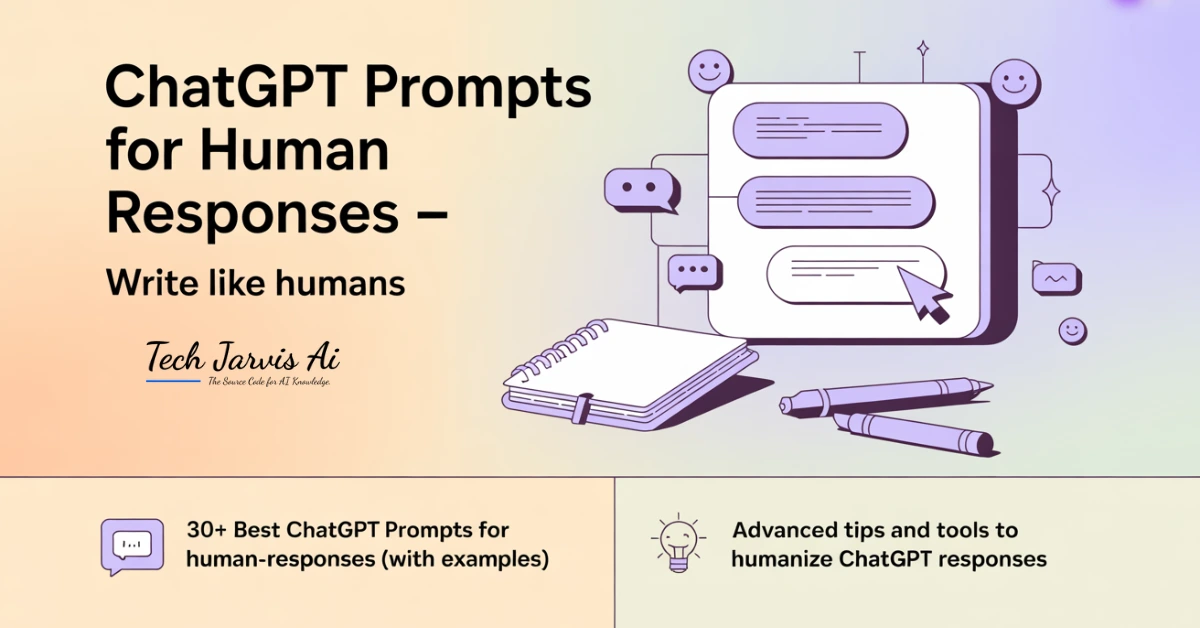

Have you ever asked ChatGPT to write something meaningful, only to get a reply that feels stiff or oddly robotic? You’re not alone. Many people love ChatGPT’s speed and intelligence, yet struggle to make its responses sound natural, emotional, and genuinely human.
The good news is this: with the right ChatGPT prompt for human responses, you can transform dull AI text into engaging, conversational, and trust-building content. In this guide, you’ll learn exactly how to do that—step by step—using proven prompting techniques that work in 2026.
What is ChatGPT Prompt for Human Responses? (Definition & Basics)
A ChatGPT prompt for human responses is a carefully written instruction that guides ChatGPT to reply in a natural, conversational, and emotionally aware way. Instead of vague commands like “write an article,” these prompts clearly define tone, audience, style, and intent. This clarity helps ChatGPT move closer to human-like communication.
Human-like responses matter because readers instantly sense when content feels artificial. AI writing often lacks rhythm, empathy, and personality. To understand how ChatGPT compares with other models and why prompting matters, you can explore our detailed ChatGPT comparison with other AI systems.
Why Human-Like AI Responses Matter in Content Writing
Human-like AI responses improve reader engagement and build trust. When content sounds relatable, readers stay longer, interact more, and are more likely to take action. That emotional connection turns plain text into meaningful communication.
From an SEO perspective, natural writing performs better. Search engines increasingly reward helpful, conversational content that satisfies real user intent. A friendly tone, emotional nuance, and smooth language flow signal quality—something robotic text simply can’t achieve.
Understanding ChatGPT’s Capabilities and Limitations
ChatGPT excels at speed, consistency, and knowledge coverage. It can generate ideas, explain complex topics, and scale content production faster than any human. These strengths make it an excellent writing assistant for bloggers, marketers, and businesses.
However, ChatGPT also has limitations. It can sound overly formal, repetitive, or emotionally flat. Unlike humans, it doesn’t naturally pick up on context. That’s why adding a human touch through smart prompting is essential. While ChatGPT is powerful, exploring AI writing alternatives can also help you find the best fit for your needs.
Core Principles to Make ChatGPT Write Like a Human
The first principle is using a conversational tone. Write prompts the way you’d explain something to a friend. Avoid stiff language and encourage casual connectors like “however,” “for example,” or “in fact.”
Second, include personal stories, emotions, and empathy. Ask ChatGPT to add examples, feelings, or simple analogies. Short sentences and clear language also help. When you combine these human-style AI writing techniques, responses instantly feel warmer and more authentic.
How to Write Effective Prompts to Make ChatGPT Write Like a Human (Step-by-Step Guide)
Start by clearly defining your goal. Tell ChatGPT what you want and who it’s for. A vague prompt leads to generic output, while a focused prompt produces meaningful results.
Next, specify tone and style. Mention if you want a friendly, professional, or casual voice. Provide context, examples, and preferred length. Finally, review the response and refine your prompt. Prompting is an iterative process, not a one-time command.
30+ Best ChatGPT Prompts for Human-Like Responses (With Examples)
Conversational & Casual Prompts
- “Explain the topic in a relaxed and friendly way, as if you’re having a natural conversation with a close friend.”
- “Keep the tone informal and use straightforward language.”
Empathetic & Emotional Prompts
- “Write the response in a supportive, understanding tone, assuming the reader is feeling unsure.”
- “Add emotional warmth and understanding.”
Professional Yet Human Prompts
- “Write professionally, but keep it friendly and approachable.”
- “Sound confident, not corporate.”
Storytelling-Based Prompts
- “Clarify the idea by sharing a brief example from your personal experience.”
- “Add a relatable real-life example.”
Educational & Friendly Prompts
- “Teach this concept in a simple, friendly way.”
- “Avoid jargon and explain like a mentor.”
Customer Support Style Prompts
- “Reply politely, clearly, and reassuringly.”
- “Acknowledge the problem before giving a solution.”
Content Creation Prompts
- “Write engaging blog content that feels human-written.”
- “Avoid robotic phrasing and keep sentences natural.”
Advanced Humanization Prompts
- “Rewrite this content so it sounds natural and like a real person is speaking.”
- “Remove robotic patterns and improve flow.”
Prompt Refinement Techniques: From Robotic to Human
Micro-prompting is one of the most effective techniques. Instead of one long instruction, guide ChatGPT in small steps. This helps fine-tune tone and clarity.
Another powerful method is the “Don’t be Shakespeare” approach. Tell ChatGPT to avoid poetic or overly complex language. Use placeholders for personalization and combine multiple prompts when needed. Comparing before-and-after examples clearly shows how refinement improves realism.
Common Mistakes That Make AI Responses Sound Robotic (And How to Fix Them)
One common mistake is using overly formal language. This instantly creates distance between the content and the reader. Generic responses and over-explanations also weaken authenticity.
The fix is simple: inject personality, emotion, and brevity. Ask ChatGPT to sound natural, cut unnecessary words, and focus on clarity. When you correct these issues, AI writing becomes far more engaging.
Advanced Tips and Tools to Humanize ChatGPT Responses
Beyond prompting, tools can help refine AI text. AI humanizer tools can automatically detect robotic patterns and smooth them out. Custom instructions and temperature settings also play a big role in shaping tone.
You can even enhance your workflow by combining ChatGPT with other AI assistant tools. For alternative text generation and refinement, exploring DeepAI features can be surprisingly effective.
FAQs
How to make ChatGPT respond like a human?
Use clear prompts that specify tone, audience, and style. Ask for conversational language and emotional nuance.
What is the best human prompt for ChatGPT?
The best prompt clearly defines intent and encourages natural language flow, empathy, and simplicity.
How to get ChatGPT to write like a human prompt?
Refine your instructions, provide examples, and iterate until the response feels natural.
Can AI writing be 100% humanized?
Not completely, but it can get very close with smart prompting and refinement tools.
What’s the difference between regular and human-like prompts?
Regular prompts are vague. Human-like prompts are specific, contextual, and emotionally guided.
How to check if AI text sounds human?
Read it aloud. If it feels natural and engaging, you’re on the right track.
Final Thoughts
Mastering a ChatGPT prompt for human responses isn’t about tricks—it’s about communication. When you guide ChatGPT like a real collaborator, the results feel authentic, engaging, and genuinely useful. Start experimenting today, refine your prompts, and watch your AI content sound more human than ever.