
Artificial Intelligence has revolutionized creative work, and AI image generator tools are at the forefront. Whether you’re a designer, marketer, or content creator, these tools let you generate high-quality visuals quickly. From realistic product photos to imaginative artwork, the possibilities are endless. In this article, we’ll explore the best AI image generator tools in 2026, their benefits, how they work, and tips for using them effectively.
What Are AI Image Generators and How Do They Work?
AI image generators are software solutions that generate images from text prompts using advanced machine learning and deep learning image generation techniques. They analyze vast datasets of visuals to understand patterns, textures, and styles, allowing them to produce photorealistic AI images or creative artwork based on user instructions.
There are several types of AI image generation tools. Text-to-image AI tools convert descriptive prompts into visuals, while image-to-image models allow you to transform or enhance existing images. AI-assisted editing tools also help designers refine and customize visuals efficiently. For a hands-on example, check out DeepAI, which showcases advanced AI-powered image generation capabilities.
Benefits of Using AI Image Generators
The best AI image generator tools save time and money while unleashing creativity. Instead of spending hours on manual design, you can generate realistic AI images in minutes. For marketers, this means quickly producing high-quality visuals for campaigns, social media, and product photography.
Designers also benefit from enhanced creative control. With AI graphic design tools, you can experiment with styles, color palettes, and layouts effortlessly. Platforms like Krea AI even allow real-time adjustments, enabling seamless artistic workflows for projects of any scale.
How to Choose the Best AI Image Generator Tool
Choosing the right AI image generator requires evaluating several factors. Start with ease of use: tools with intuitive interfaces save learning time. Next, consider output quality and style versatility to ensure your visuals meet professional standards. Pricing, prompt capabilities, integration options, and commercial usage rights are equally critical.
If you’re selecting a tool for specialized tasks, such as architectural visualization or marketing assets, platforms like PromeAI offer tailored solutions. Look for flexibility, customization, and prompt-based image generation capabilities to maximize ROI and creative potential.
Top AI Image Generator Tools in 2026
Here’s a curated list of the best AI image generator tools 2026:
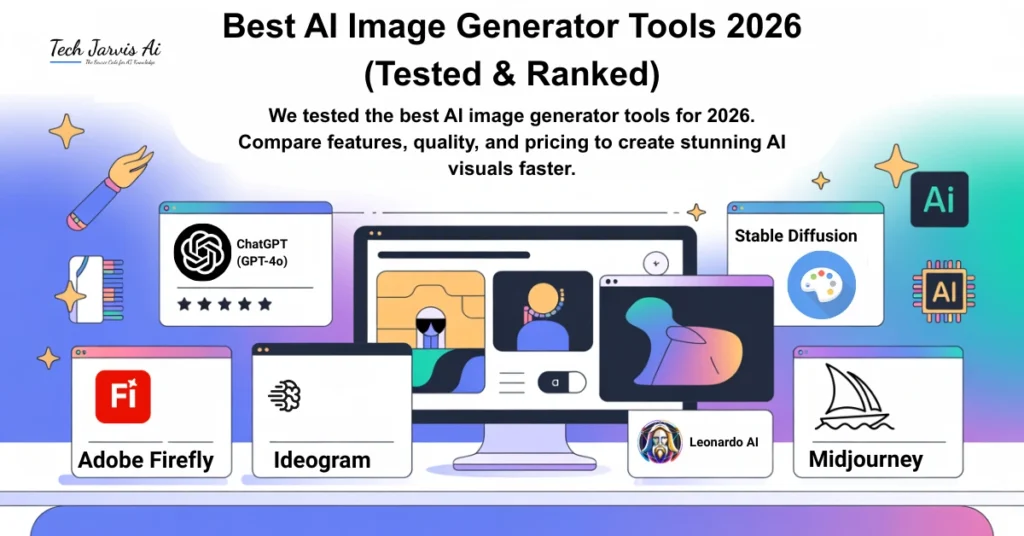
- ChatGPT (GPT-4o) – Excels in conversationally generated visuals and creative AI artwork.
- Midjourney – Known for photorealistic AI images and artistic renderings.
- Adobe Firefly – Professional-grade AI image creation software integrated with Adobe Creative Cloud.
- Flux – User-friendly tool for designers and marketers to generate high-quality AI visuals.
- Ideogram – Great for generative AI images and concept art.
- Stable Diffusion – Open-source powerhouse for custom AI-generated graphics.
- Leonardo AI – Specialized in prompt-based image generation for digital media.
You can also explore Pixelcut AI for AI product images, background removal, and marketing visuals.
Comparison of the Best AI Image Generators
| Tool | Speed | Style Options | Accuracy | Customization | Pricing |
|---|---|---|---|---|---|
| ChatGPT (GPT-4o) | Fast | Moderate | High | Moderate | Subscription |
| Midjourney | Medium | High | High | High | Paid tiers |
| Adobe Firefly | Fast | Professional | Very High | Extensive | Paid |
| Flux | Fast | Moderate | High | Medium | Free/Paid |
| Ideogram | Medium | High | High | Moderate | Paid |
| Stable Diffusion | Variable | High | Medium | Extensive | Free/Open-source |
| Leonardo AI | Fast | High | High | High | Paid |
This table highlights how AI image generator software varies in style options, speed, and usability, helping you choose the right tool for your needs.
How to Use AI Image Generators Effectively
- Craft clear prompts – Specificity leads to more accurate outputs.
- Experiment with styles – Combine keywords like “photorealistic” or “creative AI artwork.”
- Edit and refine – Use AI-assisted editing tools to perfect your visuals.
- Save and organize – Keep assets well-categorized for future use.
Tips for photorealism include including lighting, texture, and perspective details in your prompts. For artistic outputs, experiment with abstract concepts or color-driven instructions. Effective prompt-based image generation unlocks high-quality AI visuals in just a few clicks.
Pros, Cons, and Limitations of Popular AI Image Generators
While AI image generation tools are powerful, they have limitations. Pros include speed, creativity, and cost-efficiency. They allow beginners and professionals alike to generate realistic AI images without advanced design skills.
However, some tools may struggle with text accuracy, specific styles, or very complex compositions. Beginners may prefer platforms like Hotpot AI for user-friendly, quick designs. Advanced users may require platforms supporting machine learning image models for customization and professional-grade outputs.
Legal, Ethical, and Commercial Considerations
Using AI-generated images involves copyright and privacy considerations. Some tools allow commercial use, but it’s essential to check licensing. Ethical concerns also arise, especially regarding AI content detection and proper attribution.
When using AI-powered image generators for marketing or product visuals, ensure compliance with intellectual property laws. Understanding the ethics of AI image creation protects your brand and ensures responsible use of this transformative technology.
The Future of AI Image Generation
The future of AI image generator tools is bright. Expect tighter integration with design software, more photorealistic outputs, and new AI models capable of advanced creative tasks. Generative AI images will continue transforming digital marketing, entertainment, and education.
Next-gen AI image generation promises faster rendering, customizable workflows, and even better accuracy in text-to-image models. Staying updated with these trends ensures you leverage the most innovative AI design tools.
Frequently Asked Questions
Which AI image generator is best?
Depends on your needs—Midjourney for artistic style, Adobe Firefly for professional-grade visuals.
Which AI is better than ChatGPT?
For image generation specifically, tools like Midjourney or Stable Diffusion often excel.
Which AI is the best for pictures?
Adobe Firefly and Pixelcut AI are top choices for product photography and high-quality visuals.
What is the best AI product photo generator?
Pixelcut AI is optimized for product shots, e-commerce, and background removal.
Who are the big 4 of AI?
OpenAI, Google DeepMind, Anthropic, and Microsoft Research.
What are 7 types of AI?
Reactive Machines, Limited Memory, Theory of Mind, Self-aware AI, Narrow AI, General AI, Super intelligent AI.


Pingback: Hotpot AI Review 2026: Real Features, Pricing & Use Cases
Pingback: Viggle AI Review 2026: Create Viral Memes & Videos